
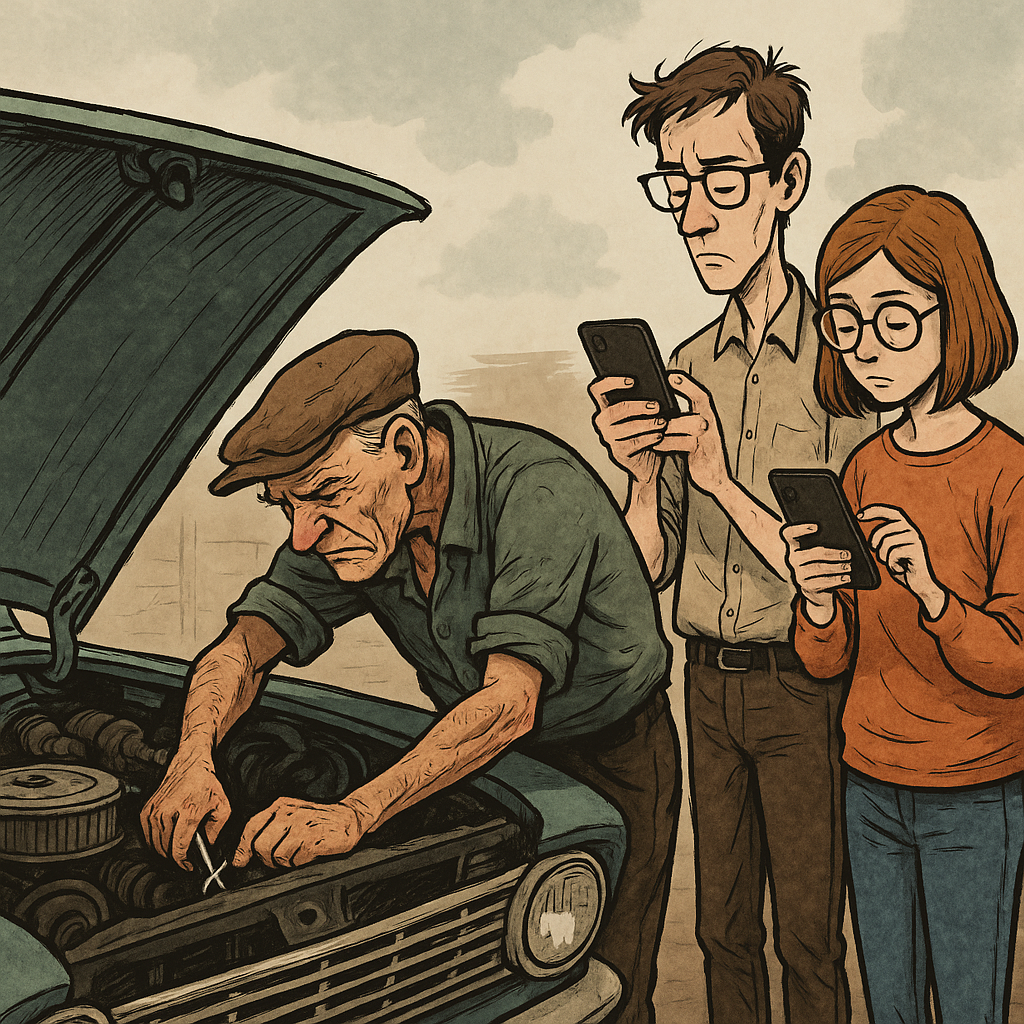


How We Traded Dignity for 24-Hour Delivery and Got the Wrong Size Anyway
Once upon a time, human beings were magnificent beasts. They built cathedrals with hand tools, crossed oceans on wooden death traps, and survived winters by gnawing salted leather. They endured with cracked hands, frozen resolve, and whatever passed for broth when hope ran low. Now, in the golden age of indoor slippers and on-demand everything, one lukewarm latte and we spiral. Somewhere between Prometheus stealing fire and Chad from DoorDash forgetting your extra guac, the species took a hard turn.
Convenience used to mean utility—an earned shortcut, not a default. Now it’s a lifestyle, an intravenous drip of curated indulgence fed directly into our expectations. Our ancestors had rituals. We have tracking updates. They buried their dead with reverence. We bury call center workers beneath an avalanche of complaints over missing dipping sauce.
Work is now a browser tab. Meals arrive in compostable foam. Even the faintest delay feels like a violation of the social contract. The frontier spirit that once carved out continents now sits hunched over a phone, refreshing a shipping link as though salvation is stuck at the Memphis distribution center.
We’ve been emotionally downsized—petulant, impatient, stunned when reality doesn’t auto-correct. Parenting has been outsourced to tablets; tantrums get quieted with gluten-free dinosaur nuggets. Kids treat delay like sabotage. Disruption? Pure treason. Not that I’m judging. I re-read emails like a fruit fly on meth and get anxious when my favorite podcast buffers. This is what we’ve trained for—constant convenience, zero resilience. We’re overstimulated, overindulged, and underdone in the patience department.
And yet we didn’t arrive here overnight. It started with harmless indulgences—drive-thrus, pre-sliced fruit, microwavable eggs. But now even mild resistance rattles us. We treat interruptions as insults. My grandfather Ward once fixed a diesel tractor in midsummer heat with duct tape, a bent screwdriver, and curses that could sandblast a barn. I recently unraveled over a jammed printer tray. We are not the same.
We traded resilience for comfort and didn’t just lose grit—we built an entire theology around it. We’ve become temple-goers at the Church of Convenience, devout practitioners in the cult of effortlessness. The rituals? Refreshing tracking updates. The sacraments? Limited-time offers. The holy trinity? Battery life, signal strength, and free returns. Absolution? Just enter the promo code.
It’s not progress—it’s a velvet-lined hostage situation. We’re no longer consumers. We’re digital pilgrims, praying to the algorithm for psychic fulfillment one scroll at a time. And when the system hiccups—when the burrito’s missing lettuce or the fries arrive lukewarm—we launch into one-star holy war. If the driver blinked weird, we demand justice, filming our fury in portrait mode like Joan of Arc with a selfie stick.
These aren’t crimes. They’re inconveniences. But we’ve been conditioned to interpret mild disruption as oppression. Naturally, we cope the only way we know how: by ordering more things to soothe us.
And those things? They’ve become emotional support packages. YouTube is flooded with adults whispering reverently over bubble wrap like it holds Tutankhamun’s femur. Unboxing has become a sacred rite. Packaging is praised like scripture: “Packaging: immaculate. Emotional payoff: brief but spiritual. Would order just to unbox again.”
But here’s the deeper con: we’ve mistaken seamlessness for sanity. We’ve built our mental health around a smooth interface—and forgotten that resistance is where growth lives. Ask anyone who’s chopped wood, baked bread, or survived the DMV without muttering Latin under their breath. Inconvenience isn’t failure. It’s character development.
And yet we tithe our attention to blinking icons. We confess to apps. We beg our smart speakers for answers and threaten them when they hesitate. Once, humanity mapped the stars with sextants and stubbornness. These days, if brunch arrives without aioli, we stage an emotional mutiny.
Evolution didn’t stall—it outsourced the sweat.
We asked the world to get easier. It did. Now we fall apart when the group chat gets quiet.
Turns out, comfort’s cheap. Effort costs more. And fulfillment? You can’t unbox that.
Sorry, Ward. We’re not what you built—but we are what we ordered.